Every construction, power, or industrial project hinges on one critical choice: the cables you use. Whether you’re wiring a residential building, upgrading a power distribution network, or setting up industrial automation systems, the right cable isn’t just a component—it’s the key to safety, efficiency, and long-term success.
As a manufacturer with deep experience in both standard and custom cables, we’ve seen firsthand how the wrong choice can lead to costly delays, safety risks, and unexpected failures. In this guide, we’ll walk you through how to select cables that meet your project’s needs, from understanding key standards to matching the right type of cable to your application.
1. Start with the Basics: Know Your Application & Requirements
Before selecting a cable, ask yourself three core questions:
- Where will the cable be installed? (Indoor/outdoor, buried, exposed to moisture/chemicals, high-temperature environments)
- What is its purpose? (Power transmission, control signaling, data communication, or flexible equipment use)
- What standards and certifications do you need to meet? (Local building codes, international safety regulations, or client-specific requirements)
For example:
- Residential and commercial construction projects often require solid/stranded core building wires (ZR-BV, BVR) that meet national safety standards.
- Power transmission and distribution projects need low/medium-voltage power cables (YJV, YJV22) with robust insulation and armoring for durability.
- Industrial automation and control systems rely on flexible control cables (KVV, TRVV) and shielded cables (RVVP) to resist interference and mechanical stress.
2. Prioritize Safety & Compliance: Why Certifications Matter
Safety isn’t an afterthought—it’s built into every cable we manufacture. When choosing cables, always verify they meet the standards required for your market, such as:
- GB (Chinese National Standards) for domestic and export projects
- IEC (International Electrotechnical Commission) standards for global compatibility
- CCC, UDEM, and RoHS certifications to ensure safety, environmental compliance, and hazardous substance limits
These certifications aren’t just labels. They mean the cable has passed rigorous testing for flame retardancy, insulation resistance, voltage withstand, and environmental performance. For projects in sensitive or regulated industries, non-compliant cables can lead to failed inspections, legal penalties, or even safety hazards.
3. Match the Cable Type to Your Environment
Different environments demand different cable designs. Here’s how to choose the right option for common conditions:
表格
| Environment | Recommended Cable Type | Key Features |
|---|---|---|
| Indoor wiring (homes/offices) | Solid/stranded core wires (BV, BVR, RVV) | Flexible, flame-retardant, easy to install |
| Outdoor/underground power distribution | Armored power cables (YJV22, YJLV22) | Moisture-resistant, mechanically protected |
| Wet/humid locations (construction sites, marine projects) | Waterproof cables (FSH) | Water-blocking insulation, corrosion-resistant materials |
| Industrial automation & machinery | Flexible control cables (TRVV) | High flexibility, oil-resistant, designed for repeated movement |
| High-interference environments (communication systems) | Shielded cables (RVVP) | EMI/RFI protection, stable signal transmission |
4. Don’t Overlook Quality: What Makes a Cable Reliable?
Even within the same category, not all cables are created equal. Here are the signs of a high-quality product:
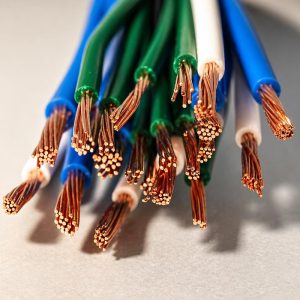
- High-purity copper conductors: Ensures efficient power transmission and low resistance.
- Premium insulation materials: Flame-retardant, low-smoke halogen-free compounds that meet safety standards.
- Consistent manufacturing: Precision stranding, uniform insulation thickness, and tight quality control.
- Full traceability: Every batch can be traced back to raw materials and production records.
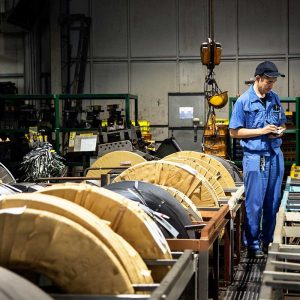
At our factory, we test every cable against these benchmarks, so you can be confident in its performance for years to come.
5. Custom Solutions: When Standard Cables Won’t Cut It
Some projects have unique needs—whether it’s a custom voltage rating, special jacket material, or tailored packaging for your brand. That’s where OEM/ODM services come in.
We work with clients worldwide to design custom cables for specialized applications, from custom labeling for distributors to unique configurations for large-scale infrastructure projects. Our engineering team can help you:
- Define specifications based on your exact application
- Test prototypes for performance and compliance
- Deliver ready-to-use products with your branding and documentation
Final Thoughts: Invest in Quality to Protect Your Project
Choosing the right cables isn’t just about meeting requirements—it’s about investing in the safety, reliability, and success of your project. By prioritizing compliance, matching the cable to your environment, and partnering with a trusted manufacturer, you can avoid costly mistakes and ensure your electrical systems perform as expected for years to come.
If you’re unsure which cables are right for your project, our team is here to help. Contact our foreign trade team today to discuss your requirements, get expert recommendations, or request a quote for standard or custom cables.